For the longest time I’ve had this idea of writing my own little band of superheroes. My own series of books that ends with a kind of “Avengers”, but focused on superheroes that are more … educational and less violent. (I run an educational online store called The Wayward Melody, where I write books and stories to teach all the topics. Among many other things.)
Every time a new superhero movie releases, I remember this idea, get excited, improve my old notes and plans for it … and then kind of forget about it. The superhero hype fades, I have to finish other projects, you know how it is.
This time, however, I wondered: “Wait. What if they’re not necessarily superheroes? What if the stories are more about what you decide to do with the powers, and lots of them choose to be evil? We could get brothers with the same powers split into good and evil, forced to fight one another. That seems like a more interesting angle …”
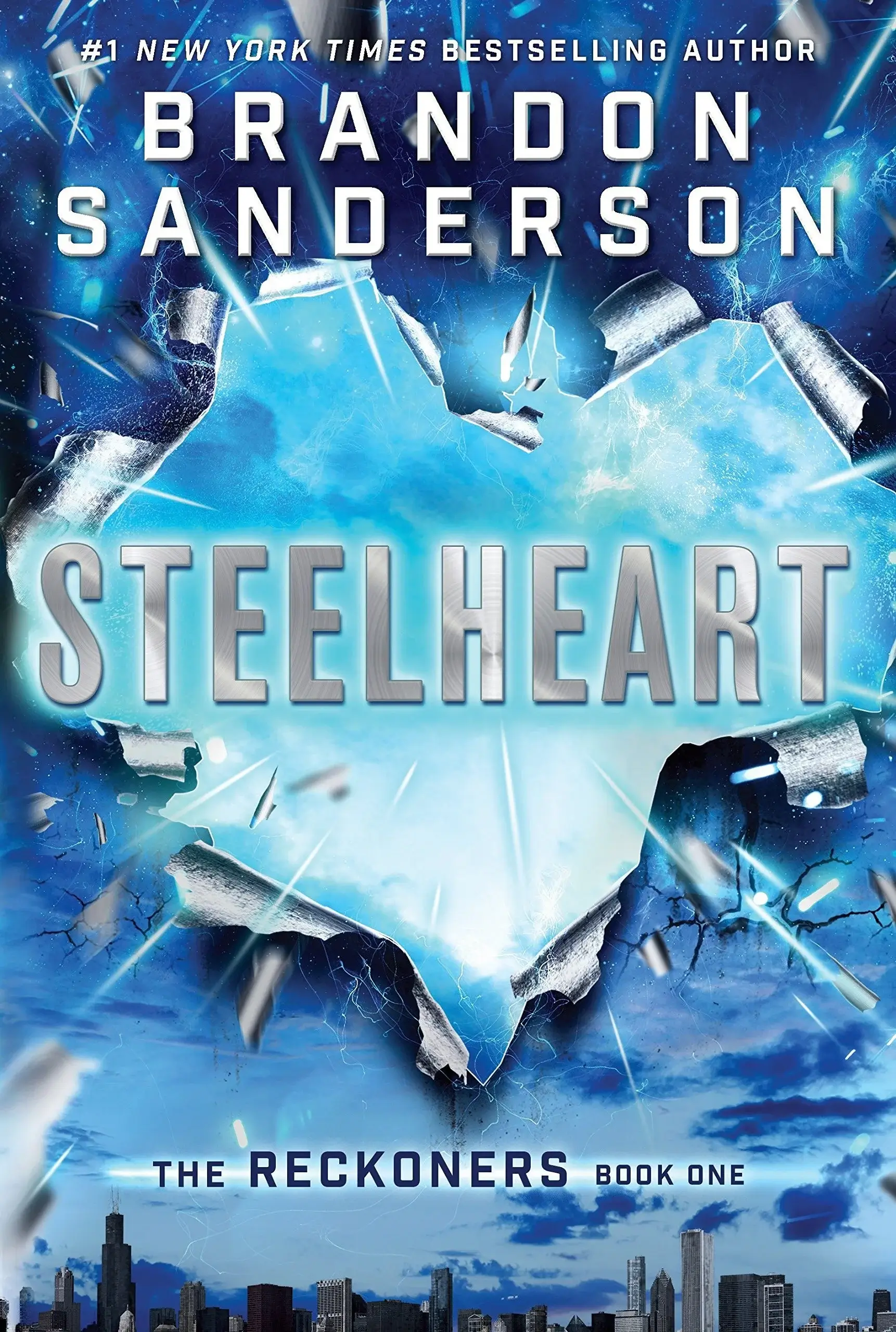
Lo and behold, that’s when I discovered Brandon Sanderson wrote exactly that a decade ago. A series of three books called The Reckoners about a world in which people suddenly developed powers, but all those who did are evil. As expected, The Reckoners are an underground movement trying to fight those evil ~~~superheroes~~~ Epics.
An interesting premise. I wanted to see how he had developed it into a longer story, maybe get some inspiration for my own. And so I started reading.
This review is without spoilers, except for the very last section. I’ll clearly mark it a such to remind you again. Also, as usual, it’s not really a review but just my general thoughts about it.
Amazing Story Engine
First of all, this core idea is just an amazing story engine. A plot rocket. A momentum builder. Whatever you want to call it.
It barely needs an introduction and exciting story just falls out.
- There’s always a new Epic to kill for The Reckoners.
- Each Epic has a clear “weakness”—it’s always fun to try and figure it out, working towards the answer to that mystery.
- It basically enables you to create any action scene or tell any story within those confines, because their powers/weaknesses could be anything.
It basically validated my idea. But, well, it’s already been done, so I’ll have to see what I do with my own stories :p
In practice, it means that the books grabbed me from the first chapter, and I read all of them at breakneck speed without ever losing interest. It just makes sense. The plot flows easily. Always some next thing to do, always some satisfying answers to questions, always time for some action scenes.
Of course, it has to be said that execution matters. Brandon picks a great first scene to set the story: our main character (David) is the only one who has seen Steelheart (most powerful Epic, ruling the city) bleed. He’s the only one who knows that he can be hurt, but he doesn’t know what about the situation caused it. This means he has valuable information and it makes sense for The Reckoners to let him into the team, but you also spend that entire first book looking for the answer to Steelheart’s weakness. You are given all the puzzle pieces—the exact situation in which Steelheart bleeds is described in detail in the first chapter—so it also feels very fair and earned when things are revealed at the end.
Pretty Consistent Quality
I think I still like the first book the best, but the others aren’t far behind. This is actually very rare. Usually my reviews think the first book was amazing and are disappointed the quality in the other books fell off a cliff. This time the quality, pace, and plot interest stayed pretty consistent up until the end.
One major factor here, I believe, is the length of the books. All three books are almost identical in length. This is nearly unheard of, especially in fantasy :p Books always get longer and longer and longer.
This disciplined approach to book length means the pacing never falters, there is never any fluff that made me yawn, the plot never comes to a standstill. All information has to be delivered succinctly and flowing through the story, because there is no time to stand still and dump some info.
Though this also leads to my one gripe with the story …
Missed Opportunities
Because the books are rather short and don’t grow in size, we don’t get to know many Epics. With such a potent concept, such a breadth of possible powers and weaknesses and consequences of this event (which they call Calamity), it feels weird that we only really get to know, what, 10 to 15 Epics? And even then most of them are just mentioned quickly or referenced twice.
I had expected a bit more creativity and depth here. Follow a few more Epic with wildly different powers and views and perspectives. Even more creative action scenes, even more interesting developments in cities ruled by a specific Epic. What Brandon did with the concept is great and solid, but I guess this is the one time a few more books or a few different perspectives (POV characters) might have made more sense.
At the same time, now you get a really tight trilogy that stands on its own, while you can always write little novellas or prequels or whatever to fit in between.
Though I have to say that the ending with Calamity was a bit unsatisfying. There’s nothing wrong with it. It makes sense, it brings most story threads to a close, it’s handled well. But it just felt … rushed? A bit anti-climactic? A bit too open-ended? I was expecting a few more chapters, a few more details, some extra twist or nice moment between characters. But the story just suddenly ended.
Spoiler Alert: A Lesson On Good Storytelling
I am a writer myself, or at least try to be one. I always try to take something away from everything I read or see, some lesson to take with me.
In these books, I was most impressed by a twist of sorts at the end of book one.
We’re introduced to the character Megan. She is hot and attractive, because of course she is (this is a young adult novel at its heart), and the main character falls in love. In pretty natural ways, the entire first book gives us snippets of information that are relevant.
- There are some mentions here and there about her being unable to use some of their technology. She just can’t really get the hang of it.
- Additionally, during a few missions, there are points where David is like “we should have been caught here—why aren’t we dead yet?”
- One of Steelheart’s most important minions is an epic called Firefight, whom David believes is actually an illusionist making it seem as if things are on fire.
- Some Epics are “Gifters”. They can only gift their powers to others. Most importantly, they can’t give their powers to Epics, only those without powers yet.
- Steelheart (and his Enforcers) seem to know exactly what The Reckoners are planning, as if they’re listening in on their secret communications.
At some point, Megan dies during a mission. I was surprised Brandon actually went for it, but it made a lot of sense and was absolutely the right moment in the story. I could believe she was actually dead and there wasn’t some miracle revival coming, I could accept that.
But then she suddenly appears in the final scene!
By now, the idea of illusionists has been introduced. So as a reader you’re wondering what this means. Is it her? Is it an illusion? A trap to make him appear? This is a way to “revive” someone that is actually interesting.
Furthermore, this exact appearance makes David realize: Megan is Firefight. She’s infiltrated them and relayed their secrets to Steelheart. She did not actually die because she can reincarnate. The special powers did not work when Gifted to her because she is already an Epic.
And now we have an even more interesting situation. Because Megan is back, and we love Megan, but she also was kind of a spy and lied to them all and might not be on their side, so we hate Megan, so … now what?
All the seeds that have been naturally planted in the story coalesce into exactly this revelation that just makes sense once you see it. I think that’s a very powerful thing about stories, and this is an example of how to do it right. This is more interesting and powerful as a “climax” to a story than just a big battle scene with punch after punch, if you ask me. (I believe it’s more common in Asian stories to have the “climax” actually be a twist or revelation as opposed to what we in the West commonly associate with a story’s climax. I like that idea more.)
Which is also why I mentioned being disappointed earlier, because a lot of this book is still pretty basic punching fighting action. When you have all powers of the world at your disposal, why not use them? Why not make the fight scenes way more creative and extravagant? Why not solve issues in some more interesting way than a big fight again that David (without any powers) miraculously survives?
If I’m ever writing those superhero stories of mine, I will certainly try to achieve something similar. Use the fuzziness of powers/weaknesses to hide heroes, to plant loads of seeds that end in sudden realization, to resolve conflicts in this creative way instead of the age old “superheroes punch supervillains until they win”.
Despite my criticisms, I thought the books were quite refreshing and enjoyed them. Now I will try to read something else entirely, though, to prevent becoming stuck in reading only the same (Brandon Sanderson-esque) books.