Some time ago, the second Spider-Man movie (with Tom Holland) happened to release close to someone’s birthday, so we decided to go watch it in cinemas with them. We’re not necessarily huge fans of Spider-Man or superhero films, it was just an accessible okay choice at the time.
Since then, though, it has become this tradition to watch every Spider-Man movie in the cinema. This year we were even fast enough to watch one of the “pre-release” screenings. That’s why I write this article with my thoughts before the movie officially “releases” in my country.
Don’t get me wrong, we do like these movies. Spider-Man is the most light-hearted and fun of all the superhero movies. We’re all teenagers or young adults, which is the ideal age range. They are mostly standalone, too, which is nice when you’ve stopped following the MCU long ago. If we had to choose our favorite, it would likely be Spider-Man.
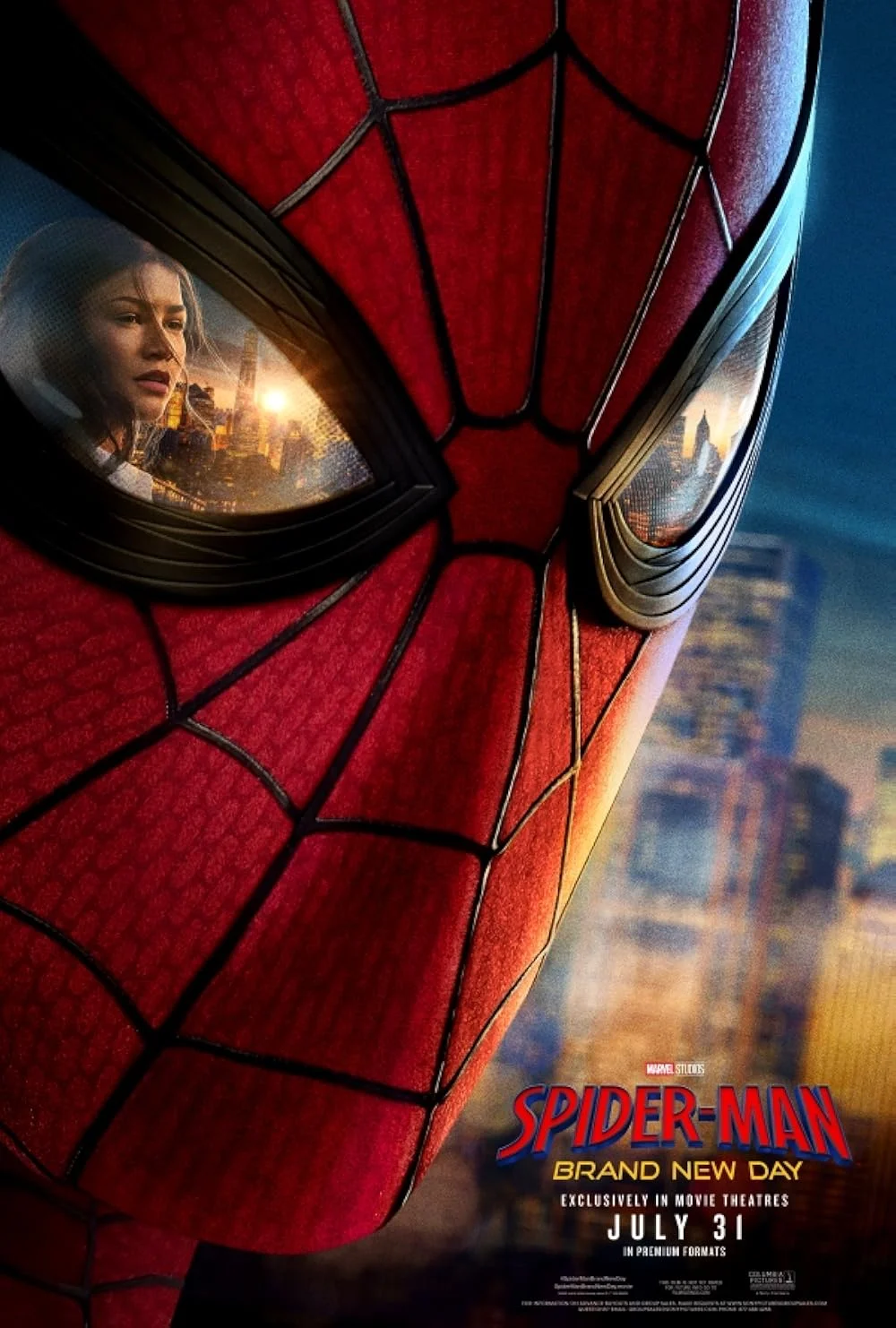
This one (Brand New Day; 2026) felt a little different, though. Both in a good way and in a bad way.
This review is spoiler-free, until the final bit after the “spoiler barrier” (where I give some deeper thoughts).
The Good
What’s the good?
- The action sequences are far more creative, varied, and interesting than usual. (I even spoke about how Shang-Chi had much better fight choreography than any of the other films. Lo and behold, after the movie, we checked and saw the same director made this Spider-Man movie!) We also didn’t notice any clear green screen or fake effects.
- They tried to add a deeper theme and emotional throughline about loneliness and being different. Spider-Man has to grapple with making his friends remember he ever existed … or decide it’s better to just leave them be and go it alone forever.
- The dynamic between Spider-Man and the Punisher (Frank) is pretty great and a much bigger part of the film than I thought. Other characters that were added were fine; we assume they’re just setting them up for later movies.
- Though the film stumbles at the start—with some mediocre jokes and slow setup—it gets into a better groove and much funnier situations towards the end. There is also a twist or two that is pretty well done and reinvigorates the film. (Although you should not think too long and hard about the consequences of them.)
- Oh, the music/audio is fine, nothing great or memorable though.
All in all, it’s not a bad movie by any means. It’s quite good!
The pace is fine, the action scenes are (mostly) outstanding, the deeper meaning is adequately woven into the movie to make it more than just mindless action. Keeping the story grounded and focused on being the “friendly neighborhood spider-man” is absolutely the way to go. Though the humor and youthful whimsy is lagging a bit compared to previous entries, it also kind of makes sense as all the characters are adults now.
The Bad
But … the film is far from perfect. And I’m a writer (or just general storyteller). So the rest of this article will mostly be about bad stuff and disappointments ;)
Let me start by saying that we also watched The Odyssey about a week ago. Going to the cinema is quite a rare event for me, actually, so seeing two movies so close together makes it hard not to compare the experiences.
Efficiency
Comparing the two, the first thing that stands out is efficiency. The Odyssey is very economical with dialogue and scenes, which means 3 hours fly by and feel like 2. Spider-Man, on the other hand, is filled with lingering shots and needlessly drawn-out scenes. We could easily cut 30 minutes from the runtime just be tightening that up. These were the only moments that I started yawning or getting sucked out of the movie.
Let me give an example. Peter Parker and MJ finally meet again and he tells her that they used to be together, but due to a spell (i.e. the events of the previous movie) she has completely forgotten him. We get a 5 minute scene with lots of silences, lingering on faces, and repeated statements about not remembering or being sorry. As I watched it, in real-time, I was a bit mad and shortened it in my head.
- Peter Parker has this short speech that builds up to his big statement: “I … love you.”
- MJ, after a brief silence and look, mirrors his words by saying: “I … don’t know you.”
That’s it. Point made, case closed. Music climax, then cut away.
The exact same message, but in a less melodramatic and slow way.
Similarly, we have a flashback to a little motivational speech that his Aunt May gives him. We see the flashback once very briefly. Then we see it in its entirety. And then, at the end, we see it twice for reasons I won’t spoil.
This is inefficient in general. But it makes sense here, because the attempt is to “recontextualize” the speech the second time you hear it. So I’ll give it a pass for that (only this once!)
But the speech itself is so long, and boring, and meaningless. It’s vague platitudes and phrases without any specifics or character reveal. It’s the same speech a superhero has heard a million times before. You just don’t see or feel why it would change anything for anyone to hear this. A more in-character response would actually be to say “You know nothing about what it is to be a superhero!” and storm off mid-speech.
We devoted nearly 10 minutes to this speeching by Aunt May … and I can’t tell you a single thing she says or point she makes or why it’s in the film. If it was my decision to make, I would …
- Show the speech once near the start, then show it once near the end (to recontextualize in a smart/twisty way).
- Make it only two or three lines. Clever lines, one-liners, with actual specific meaning.
- And have the exact thing said (or alluded to) here actually impact the actions in the story directly in the scenes that follow.
Shallowness
Why do I care about efficiency?
Firstly, because a film is boring or uninteresting if it takes too long for things to happen or develop. That’s why the golden rule in writing is to always cut and make it shorter. No, it doesn’t need to be aggressively paced for shortening attention spans, absolutely not. But as my example above demonstrates, you can add more meaning/emotion/depth in less time if you revise a few times and make smarter use of dialogue/actions.
Secondly, because this would win back a lot of time that could be used to actually explore and deepen the themes.
This movie opens many interesting questions and emotional beats. But it doesn’t follow through on most of them. You need at least a handful of scenes to develop character and explore a theme from different angles. The main theme gets almost all the attention, and everything else is quickly handled in one long flashback or long heavy-handed speech.
The movie is pulled in two opposite directions. It tries to hang on to the youthful nature of the earlier films, when they were in high school. But it also tries to turn it into more of an adult drama (about loneliness, among other things).
I completely understand the choice, because it actually fits the characters and their ages and arcs. It’s just not executed very well, I think. You get the classic problem of trying to do too many things and not really doing any one of them. Is the movie for teenagers? No, there’s too much weighty emotion and relationship drama, too little whimsy. Is the movie for adults? No, it’s too childish and unserious for that.
Our antagonist should have probably received their own film first. To properly set them up, make you really understand them and feel for them.
One character turns out to be a liar. They make it seem like this is a clever deduction by Spider-Man or a big twist. But the lie is so glaringly obvious, and we know absolutely nothing else about this person, that you just shrug.
This movie does the typical Marvel thing of trying, once or twice, to actually introduce real emotion and proper depth … only to be a coward and undercut it with a silly joke or some alarm going off. The Punisher has a great bit of hard-hitting dialogue, and it’s just ruined this way.
It’s like a lose-lose situation. They become all melodramatic and linger too long on boring shallow scenes, while devoting too little time and cutting away when something actually becomes heavy or matters.
It creates this situation where nothing has true (emotional) depth. The movie makes less sense the more you think about it and doesn’t ever warrant a rewatch.
Words Over Actions
If you look at the examples I’ve given, the pattern is quite clear. This movie prefers to say things literally and say everything out loud. That’s how you get speeches, slow dialogue scenes, another typical monologue by the antagonist at the end, etcetera.
But this is the most shallow and slow/boring way to tell a story.
Leave things unsaid. Show true character and choices through the actions they take. Use the magical ideas of “subtext” and “acting” so you don’t have to literally say stuff.
To harken back to my first example: It’s obvious Spider-Man knows and still loves MJ. Does he need to say it five times in different ways? Or is a sorrowful or pining face enough?
To give another example: it is stated several times, in different ways, how lonely and sad Spider-Man is. Like, it is said by other people in ways that try to be funny or realistic, but fail. (“Oh your apartment is like the stereotype of a lonely guy in his 20s with no friends! Haha!”) But you can show loneliness much more deeply with one simple action: have him ask for help and nobody responds.
Too often, superhero films think that “action” means “fight sequence”. This movie was at its most interesting when it had action that was not that. Things like Spider-Man researching new tech and trying new powers. Things like Spider-Man having to make a hard choice. These are all actions, no words spoken or slow lingering shots, but they’re not just another big CGI fight.
There’s too little of that, and too much talking that does not move anything forward or reveal any more depth.
To compare it with The Odyssey one final time: Nolan always has some action and people clearly moving towards a goal in every single scene. Which is why a 3-hour movie about some Greek dude trying to get back home feels much shorter and more eventful than this Spider-Man movie with loads more characters and set pieces.
In hindsight, comparing these two films makes a lot of sense, actually. Because the films complement one another. The major flaws in The Odyssey are strengths in Spider-Man, and vice versa. Whereas Nolan seems allergic to character or humanity, Spider-Man obviously focuses completely on our central character and his emotional journey. Whereas Spider-Man is very inefficient and lagging, Nolan is always economical and well-paced. In a sense, Nolan comes up with some abstract idea or grand outline and then forces puzzle pieces to slot in. The Spider-Man script was written organically and on the fly, which makes individual moments and characters work but the overall outline lack any cohesion or depth.
Conclusion
Those were my brief thoughts on the movie. I actually talked about a lot more with people afterwards and had a lot more to discuss, but I tried to summarize it into something sub 2000 words ;)
If I had to give the movie a grade, it would be a 7/10.
You can stop reading now if you want.
Below I’ll just give some of those deeper thoughts and details, but in doing so have to give loads of huge spoilers!
Spoiler Barrier
Let me start with the least spoilery thing. Another example of Marvel stumbling into the perfect opportunity to do something interesting, but undercutting it with a mediocre joke and dropping it.
Peter visits Bruce Banner at university. Bruce now has an inhibitor that prevents him from turning into the Hulk and spends his time teaching Physics. One of the students asks him about the events in Avengers: “If Thanos was concerned about overpopulation and food shortage, why didn’t he use the infinity stones to create more food/space (instead of wiping out half of all life)?”
What does the film do? It cuts to another student who has painted his face green, who gets up and yells “Hulk Smash!” And Bruce is like “There’s your answer, class dismissed, moving on!”
What? WHY? You could have actually given an explanation here to make your previous films look better. You could have said something interesting. You could have just left the green-painted-guy as a quick little joke in the audience. Calling attention to him just makes the joke worse.
At the end of the fight sequence with Bruce, he is confused and sent off to some institution, and that’s all we ever hear from him again. This entire character and plot thread is not really resolved or deepened, and just left dangling. Which is extra baffling because the entire movie is about superheroes being put into instutitions or shepherded away by “Damage Control”. They could have actually done something interesting with The Hulk, of all people, being locked up and researched, which also makes the stakes much higher for Peter to figure this out and rescue him. This would be the film to fully explore this.
Speaking of Damage Control, all of us had the feeling that it’s some bigger institution from the comics that we should have known about. Yes, it’s introduced in the film, but in a quick and mostly vague/stereotypical way. We don’t really know how it works, why it exists, etcetera. They repeat the name lots of times to make us remember. (“Oh they’re going to the Damage Control Detention Center.” “Oh no something happened at the other Damage Control location.”)
But it’s always better to flesh out your concepts if you want people to truly remember them. Give us one or two quirky, interesting, odd aspects of this institution. I don’t know, maybe they have a really unique approach to “controlling damage”, or really strange prison cells. Or maybe they’re headbutting with the police all the time, because the police wants to shoot criminals but they want to help them. Which would tie the whole movie together, because that thematic idea is exactly the conflict between Peter and Frank in this film. You can use it for a joke and it helps people get more attached to this new institution at the center of this story.
Even with some pretty standard exposition at the start of the movie, it’s still probably the best-paced part. It simply works very well to catch people’s interest when you’re introducing new stuff and setting up the world. The first part of this film introduces Damage Control, introduces the antagonist’s weird powers, introduces Spider-Man’s current life and what his friends are up to. You can rapidfire these different introductions, because you have the rest of the movie to actually flesh them out.
But after a pretty solid start, the film settles into many sequences with long silences, long shots, an uncomfortable Spider-Man. Lots of films and series do this nowadays. With shows it feels like they need to pad the runtime … but why do they do it in movies!? It’s never interesting or funny.
Peter going to Ned’s party is both a very good scene (good jokes, good action by seeing MJ with another boyfriend), and a very bad scene (because most of the time he stands awkwardly and does not speak, looking like he’s sick and wants to get out of his own story).
Everything happens just too slowly all the time. The “awkward conversation” that could be hilarious is not an actual conversation, but a one-sided monologue by Ned that is barely funny. What is a sensible scene that should be included and should be great, turns into a slog to sit through.
The worst part of the movie, though, comes after this moment. It roughly represents the third act of this film, though it starts a bit earlier than that and the actual ending of the movie was fine. I’m talking about the part where the antagonist is revealed to be Jean Grey and we dive into her and her backstory.
There are inconsistencies and gaps in her power. But that’s to be expected in a fantastical superhero movie. I don’t mind powers not being explained. I don’t mind sci-fi or fantasy elements, in fact, those are the main genres in which I read and write. I don’t really mind powers getting stronger when she is emotional/mad about her sister’s death.
I do mind when a story does give a very precise explanation and then forgets about it.
Jean Grey can hop into anyone else’s head to read/control them. They define a clear maximum range for “head hopping”. Spider-Man seemingly outwits her (in a race towards MJ) by stranding a helicopter in mid-air with nobody nearby to jump to. The film confirms it’s Jean inside the helicopter pilot’s head.
So Spider-Man wins the race, meets MJ, takes her to safety, kisses her … and then, plot twist, it turns out he was too late anyway and MJ was controlled by Jean Grey all this time. The twist is great. But … how? Can she also hop into birds? Don’t set hard rules for your world when it suits you, then ignore them when they would make your plot twist idea impossible!
They could have had a single shot of the pilot falling out of the helicopter. Getting closer to the people below. With only a few seconds, you would imply that Jean used this to get to ground and hop into someone else. Your rules stay consistent + the tension is actually higher for the entire MJ sequence.
Besides this one rule (maximum hopping distance), her powers have no other rules. This would make them insanely powerful and versatile. Her powers are the perfect fit for a really twisty and tense espionage movie.
It would have been awesome if she had been working for a year to infiltrate the coworkers of Damage Control and slowly replace them all with people loyal to her. That one plot twist with MJ actually being Jean the whole time could have been used five times over, in completely different ways, in one movie. You start to doubt what’s real or not. Spider-Man gets even more isolated because he can’t trust anyone to actually be themselves. Loads of cool opportunities.
She could easily have impersonated some higher-up to give the order to “find/release her sister”. Why search for her yourself? For that matter, if you’re able to control anyone, then you can influence the world in much greater ways without any violence. She could literally walk in the front door, hop into a guard, hop into the next one, until she is inside Damage Control for free. (Unless they have magical head hopping protection the film never told us about …)
But no, we get your standard violent villain, who uses her power in the one obvious way to get out of trouble each time.
Which is especially baffling because the entire point the movie tries to make is that she is some innocent person who is rightfully mad that they took her sister. If you want us to feel empathy for her, then don’t make her do awful stuff over and over. Don’t make her use her powers in the most unethical ways possible!
Most of all, don’t keep her a complete mystery until the end, where we get some flashbacks and speeches that are much too long and not impactful enough. The one throughline is the word “V-MAX”, which ends up just being a misread of the brand name of the vent shaft above the Damage Control torture chamber. It’s an okay idea, but just not (good) enough. There should have been hints and clues about this power from start to finish. Spider-Man is seemingly able to access all sorts of data/files and is in constant contact with the police investigating this. Jean is able to find his apartment easily, but using someone else’s body she might be sloppy and leave behind clues about herself.
It’s … it’s just near impossible to feel anything for a lost sister that you did not know existed until the very end, and whose only act on screen has been to violate people’s minds for fun for one minute, then go and get ice cream. If Jean’s emotional state suddenly magnifies her powers, why hasn’t it happened before? Why can’t we have a scene where she loses control because of anger? She could have tried to infiltrate Peter’s mind, then panicked to get out, and left behind clues about her without him even knowing WHY those clues are there.
In short, as I said earlier, the movie misses depth. Depth is not achieved with one monologue near the end. Depth is achieved by repeatedly exploring a character (or concept/situation) throughout a film, from different angles, with different developments, with time in between to let the ideas settle and grow in our mind. Because each time you revisit it, that is when it gets deeper. Each time this antagonist does something kind or humane, we start to empathize.
The fact that she saves Spider-Man’s life near the end by hopping into his head and helping him breathe (while in a coma) is a great idea. But it’s only one scene and it comes far too late. We should have seen her as someone worth the empathy before she unleashed her anger.
I’ll end on a final missed opportunity that would’ve achieved that depth. When they catch Jean halfway through the film, her last words are a whispered “Sara”. The director (Metzger?) of Damage Control claims he was thinking of a deceased colleague called Sara, that’s probably why she said it. An obvious lie that someone with spidey senses should have caught—because the whole fucking cinema did :p Literally everyone turned to each other and shook their head.
Also a very uninteresting lie. He could have literally spoken the truth! “Sara is her sister. She was a danger to society, so we arrested her a while ago.” He could have made up something more interesting! “SARA is an acronym for a secret government program. I can’t tell you anything else, I’m afraid, unless you get clearance.”
Then, some time later, MJ recalls that she, well, does not recall anything from when Jean was in her mind. It was an instantaneous “now I’m here, now I’m suddenly there”. No memories. No interaction with Jean. That’s how Peter knows Metzger lied, because he could not have been “thinking of Sara” while Jean was in his head.
When this was revealed, both me and my brother instantly thought the story would use this. The entire film is about Peter’s friends having forgotten him. It felt like this was setting up a collaboration between Jean and Peter. He would seek her out and ask her what she knows about the mind and memories. She might agree to help him with this, as long as he obviously stopped hunting her and protected her.
Now we get into actual, interesting, morally grey areas! Spider-Man starts obstructing the police investigation. He sees Jean abuse her power, but doesn’t say anything about it because he wants her help. We would get a great scene at the halfway point of the movie where they meet for the first time, full of distrust, unsure what to do, but that slowly melts away and a friendship starts.
They could work together for a bit and discover something about her powers or the mind that, when applied, would make his friends remember him. It could be something really silly that leads to a funny scene, or it could be something really hard that leads to a tense scene (or a failed attempt).
If this is your setup, then Spider-Man taking a bullet for her in the climax actually makes a lot of sense.
The possibilities are endless! Coming back from the cinema, my siblings and I could instantly come up with like three movies worth of amazing Spider-Man conflict, character building, and plot twists.
Instead we get … this slightly messy script that misses most opportunities by a mile. Not bad, just disappointing ;)